HOW WE TEACH
At NIDO, we don't lecture children into learning. We build environments that invite it. Every shelf, every material, every moment in the daily rhythm is chosen to make discovery feel natural and inevitable.
OUR FOUR PILLARS
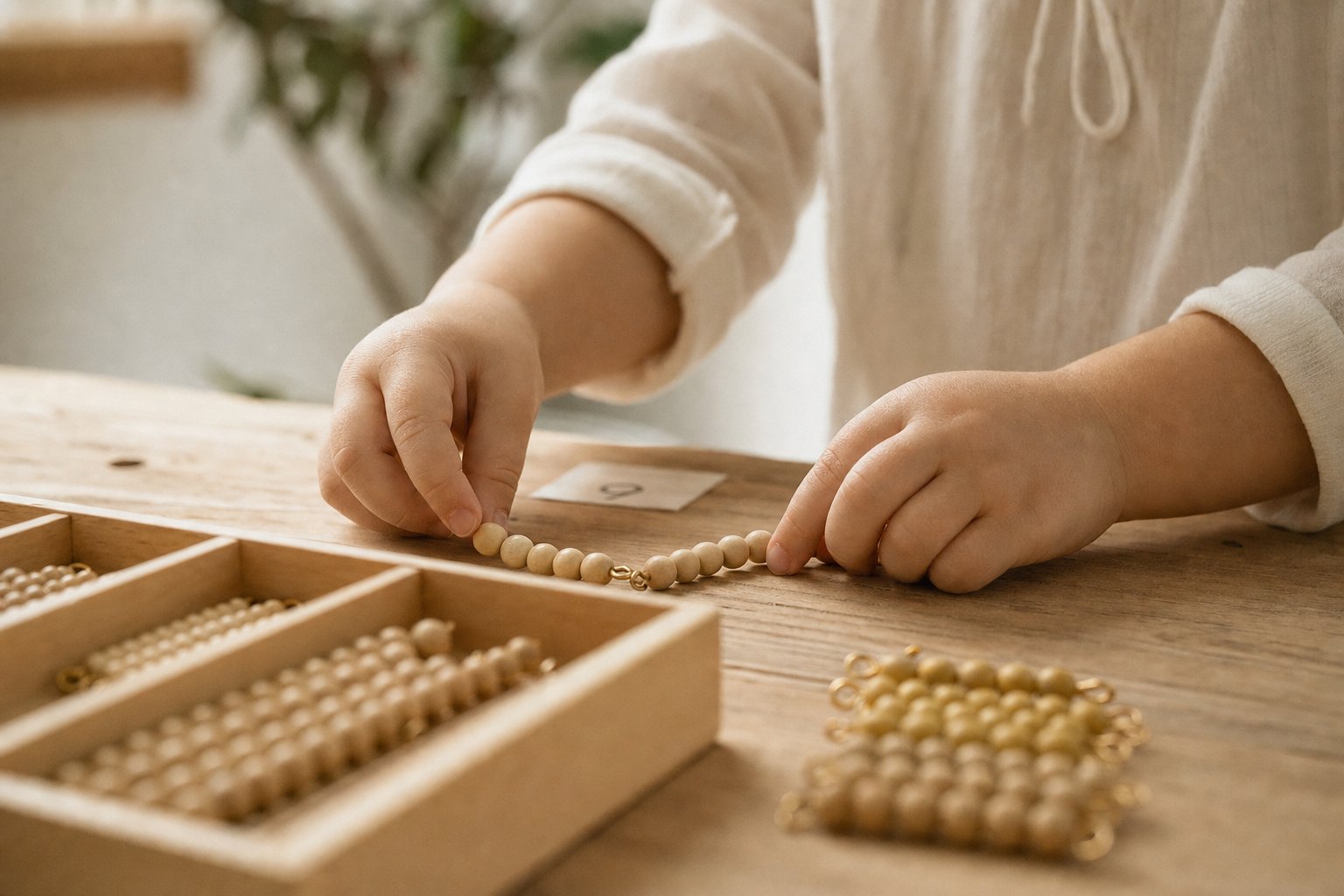
Real wood, real glass, real work. Our shelves hold materials made to be touched, carried, and used until mastered. Children learn to care for their classroom because it belongs to them. Each material isolates one concept at a time — a constraint that makes understanding click.
Bilingualism is not a subject at NIDO — it is the air. Alternating immersion days mean children hear authentic English and authentic Spanish from teachers who are native in each. The brain builds two strong language systems simultaneously, which research shows deepens cognition far beyond vocabulary.
Rain or shine. We walk to DC's parks, visit the botanical garden, tend a small school garden, and let children move their bodies for at least an hour each day. Outdoor learning is not recess — it is science, geography, and physical development happening together, outside the four walls.
We send a real weekly note — not a generated newsletter. Parents are welcome to read a book to the class, share a family recipe, or just sit on the rug and watch. Three formal conferences each year let us go deep together. Your child's story belongs to both of us.
THE DAILY RHYTHM
Families arrive, children choose their morning work. Circle opens with songs and a greeting in both languages — setting the language of the day.
Uninterrupted choice work. Children select materials from the shelf, work independently or with a partner, and return everything before moving on.
Daily outdoor movement — a neighborhood walk, garden time, or free play in the yard. A nourishing snack in both rooms.
Teacher-led language work, bilingual read-aloud, collaborative art or science project rooted in the week's theme.
Two healthy snacks each day, included in tuition. Allergy-aware kitchen. NIDO does not serve lunch — families pack their child's lunch from home so meals stay familiar and allergy-safe.
Lights low, soft music. Younger children nap; older children rest or read quietly. The classroom breathes.
An afternoon return to independent work — often the time children choose the materials that challenged them in the morning.
Children gather their things and share one moment from their day at the door. Families leave with a small note on what their child worked on.
FROM THE CO-FOUNDER
"Children don't need to be taught to be curious. They need an environment that doesn't dim it."
— Gabriela Garduño, Co-founder & Educational Director
SEE IT IN PERSON
Walk through the classrooms, watch a work cycle in progress, and ask us anything. Open houses are monthly and intentionally small.